How it works
Optrix is a puzzle about pushing tiles around to steer laser beams, so that in the end every crystal lights up in its own matching colour.
You can only ever nudge tiles — once pushed, they slide until they hit another tile or the edge of the board. Movable tiles are easy to spot: they have a gentle wobble. Everything else is bolted down.
While a tile is sliding, it’s inert: it doesn’t interact with any beam it crosses or slides into — it only briefly interrupts the beam as it passes through each square. The moment it stops, the normal rules kick back in. So you can move a bomb across a beam, but not into one.
Two timers run in parallel: one counts down to the laser firing, the other to the end of the level. If the first feels too slow, fire the laser yourself with the button at the bottom right. The laser always enters the board as a white beam from the centre of the left edge.
A level only counts as solved once every crystal is correctly lit and no tile is still moving. As long as something is still gliding, even a perfect light configuration doesn’t count yet.
Crystals
Your goal — light up every crystal in its own colour.
The tile that matters most
Crystals come in every colour. The moment each crystal in the level is hit by a beam of its own colour, the level is solved.
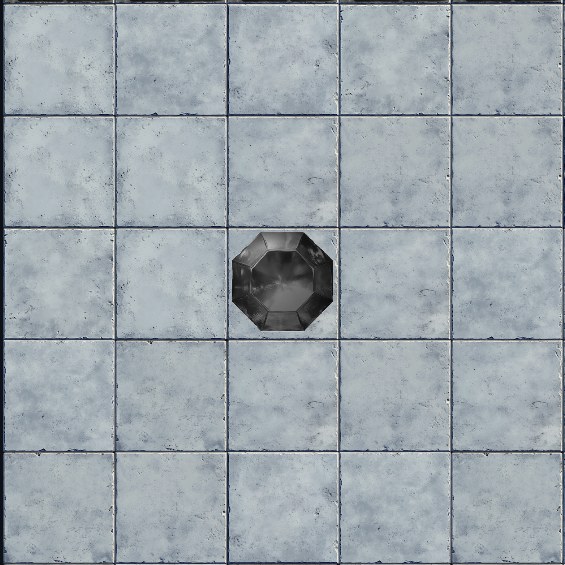
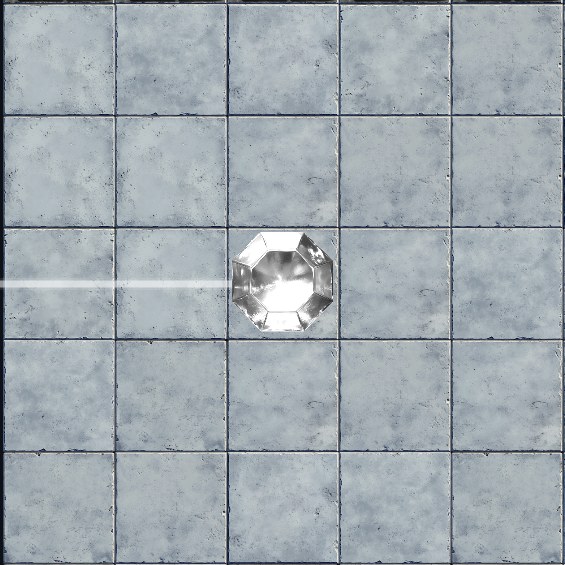
Below is a white crystal — once dark, once struck by a white beam.
Wrong colour doesn’t count: a red beam on a blue crystal gets you nowhere.
Mirrors
The fundamental tile — bends light by 90°.
90° deflection
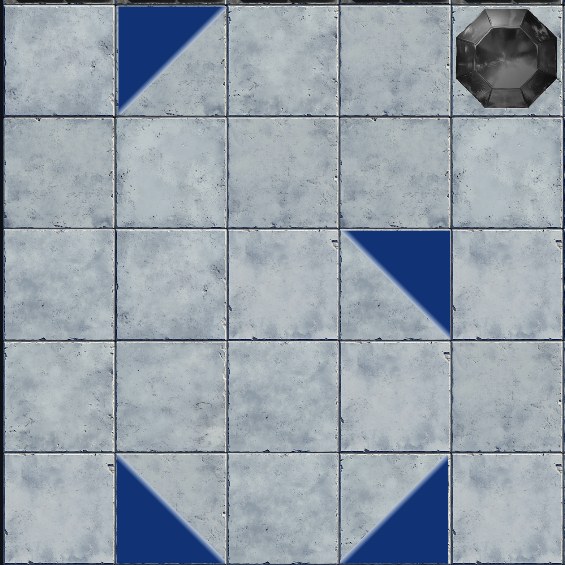
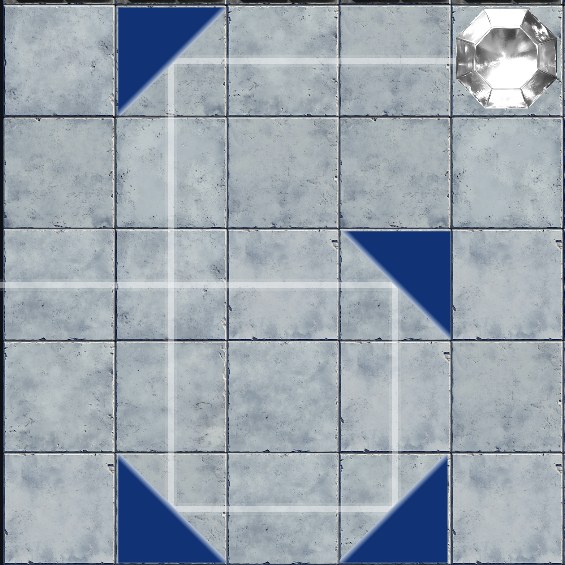
Mirrors deflect any beam that hits them by 90 degrees. They come in four orientations, each either fixed or movable.
The tile shows all four variants side by side — once at rest, once with a white beam making each deflection visible.
Simple in theory; the real fun is in how they combine with everything else.
Splitters
Multiply the beam — colour stays the same.
2-way & 3-way
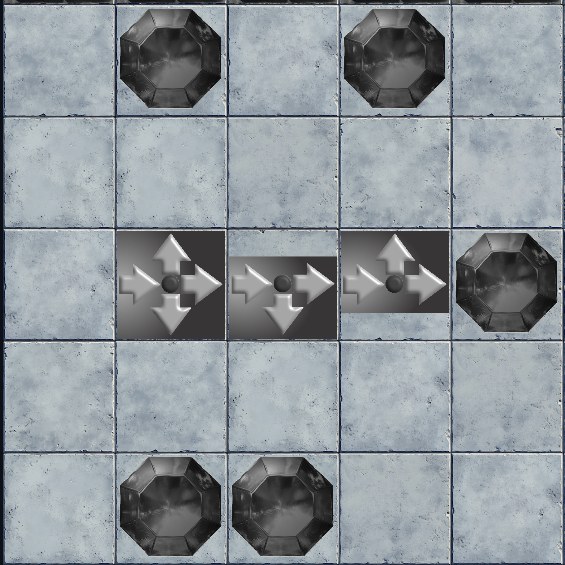
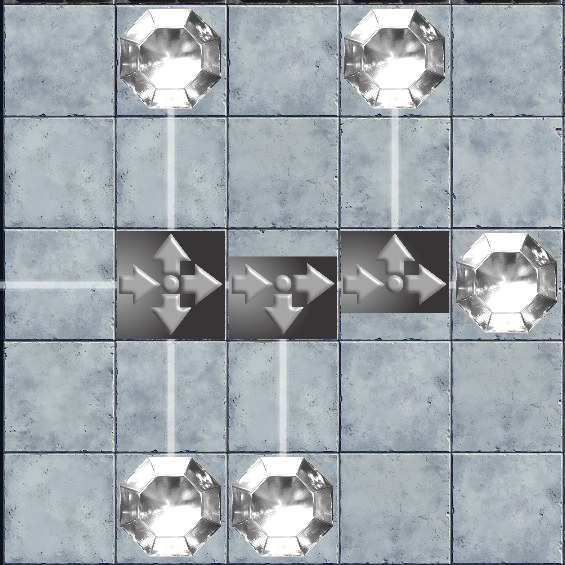
A splitter multiplies the beam that hits it — into two or three beams of the same colour. Don’t confuse it with the colour splitter further down, which pulls colours apart.
You can see a 3-way splitter and two 2-way splitters facing different directions, both with and without a white beam.
Splitters = more beams, same colour.
Additive colour mixing
A quick detour through physics — painless, promise.
Colour splitters
Break a beam down into its colour components.
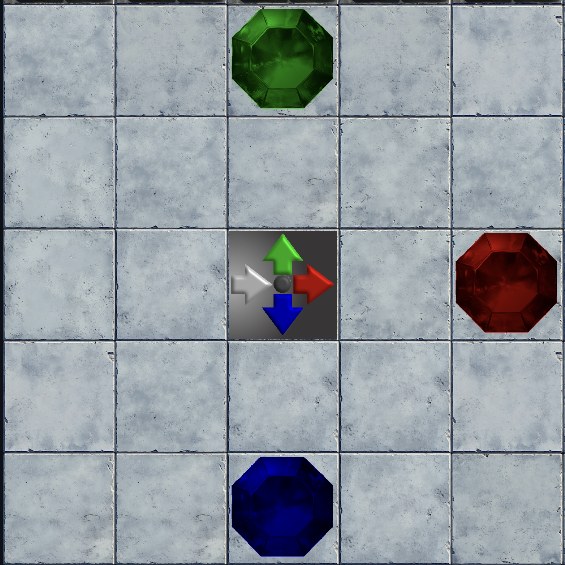
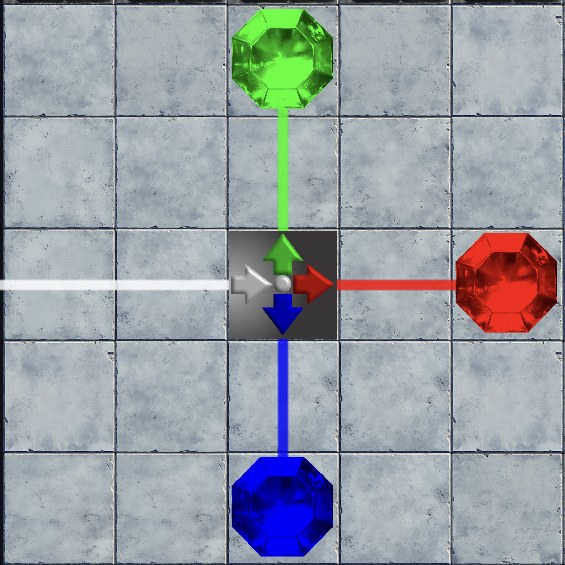
Where the splitter multiplies a beam, the colour splitter pulls colours apart. The 3-way colour splitter is actually the simpler of the two — it cleaves a white beam straight into its three primaries.
3-way colour splitter
The 3-way colour splitter breaks a white beam into red, green and blue — the three primaries.
It can only emit colours that are present in the incoming beam. Feed it pure red, and pure red is all that comes back out.
2-way colour splitter
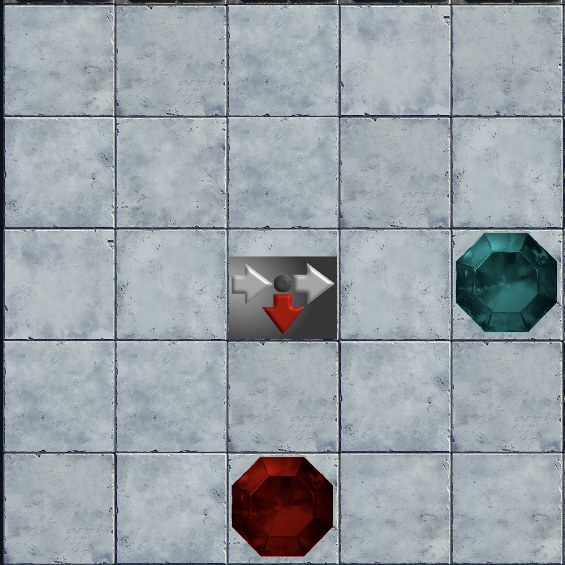
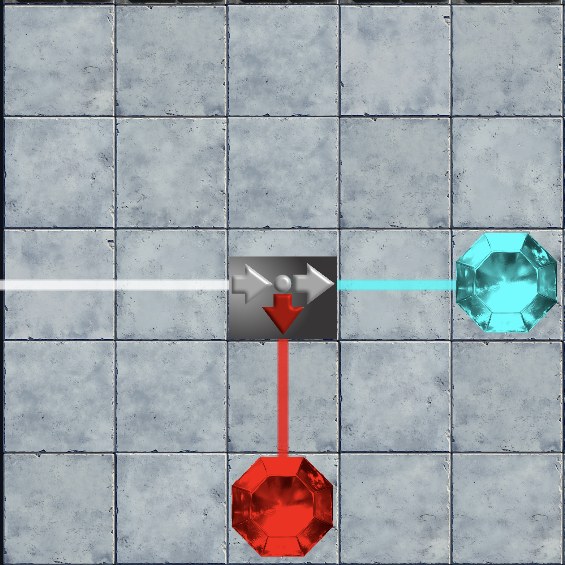
A 2-way colour splitter peels off a single primary. The remainder of the beam keeps going — in the colour that’s left over.
Here it splits red off to the right. White minus red equals cyan — you can see it in the diagram above.
Two 2-way colour splitters in series
Here’s what happens when you chain two 2-way colour splitters together.
The first one peels off red — leaving cyan. The second one strips blue from that cyan. What carries on at the end is green.
Get comfortable with additive colour mixing — it’s the core principle Optrix returns to again and again.
3-way colour splitter after a pre-strip
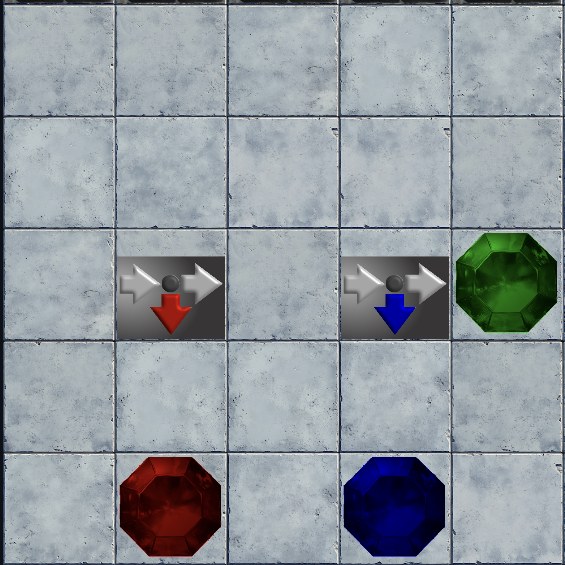
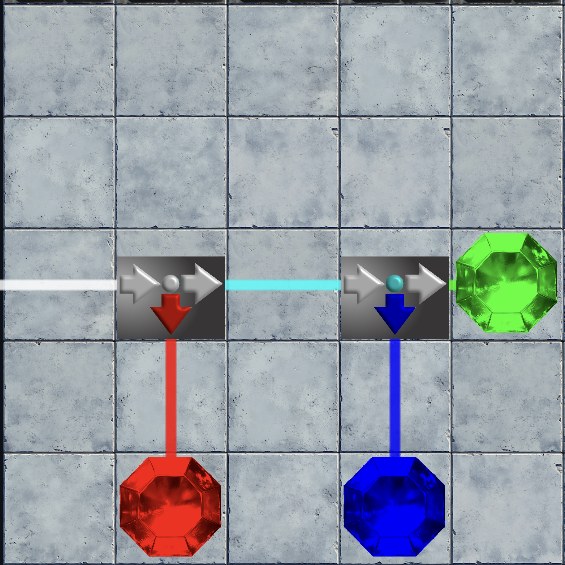
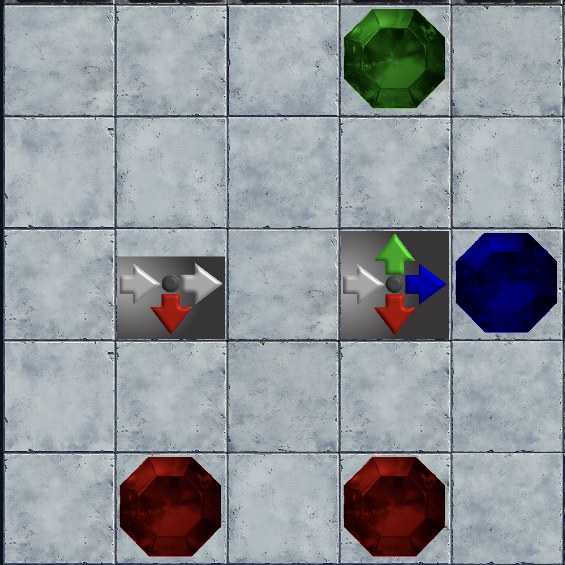
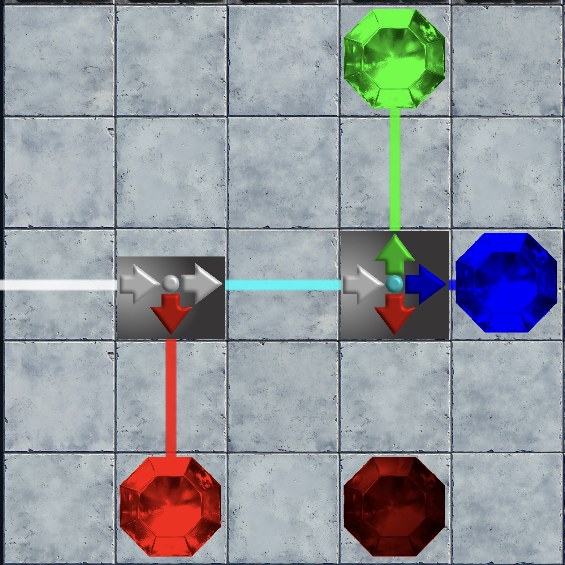
The 3-way colour splitter can also only emit what reaches it.
Here a 2-way colour splitter has already removed the red. The 3-way splitter now receives cyan — and accordingly emits only green and blue. The red output stays dark.
Doors
Block the beam — until you light them up in their colour.
Open by illuminating
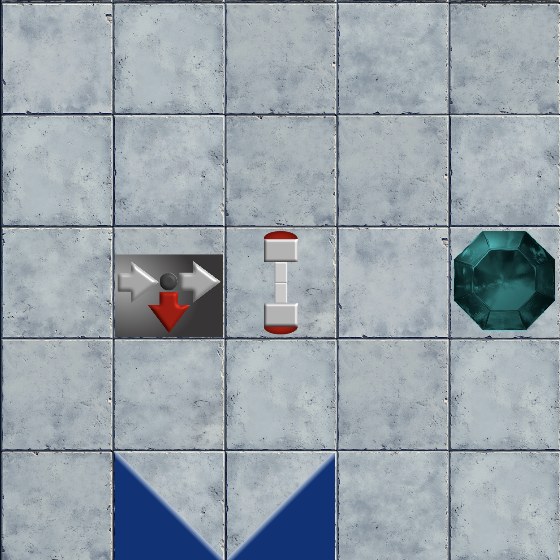
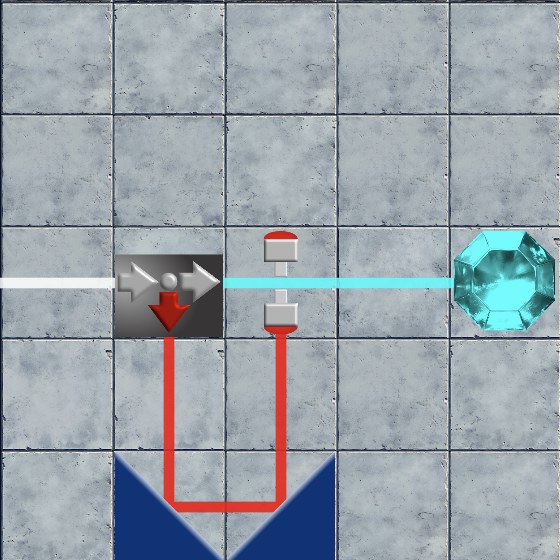
Doors show up often. They block the beam from one side and only open when struck from the other side by a beam of their own colour.
The example shows a red door: it needs a red beam from above or below to let the horizontal cyan beam pass through.
Obstacles
Five tiles that get in the way of either tiles or beams.
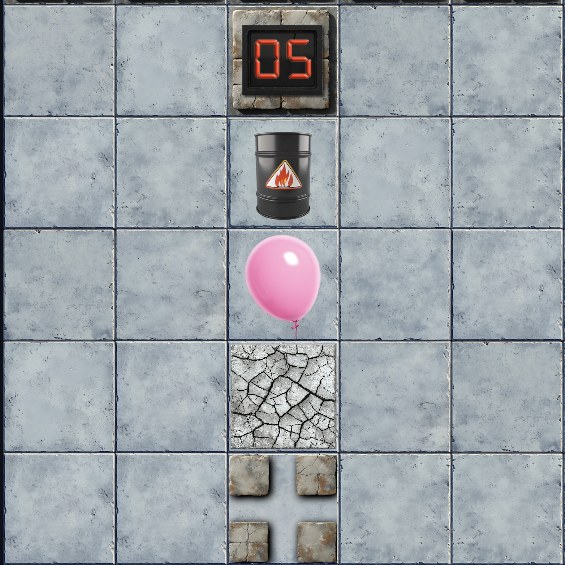
- Timed Blocker When hit by any beam, it counts down from the seconds shown on its face. Once it reaches zero, it disappears.
- Bomb The moment a laser touches it, it explodes — and you lose the level immediately. Keep it clear of every beam path.
- Balloon Stops tiles you try to push into it. A laser, on the other hand, pops it on contact.
- Obstacle (brittle stone block) Blocks beams and shatters when struck by a tile with enough momentum — the incoming tile has to have travelled at least one square first; a nudge from the neighbouring cell isn’t enough.
- Tile Blocker Lets laser beams through, but stops tiles. Useful for channelling movement.
Warps
Simple rule, intricate circuits — the trickiest tiles in Optrix.
The basic rule
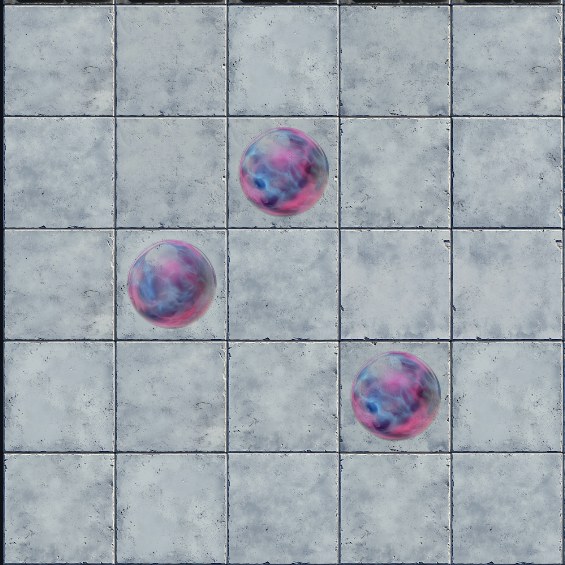
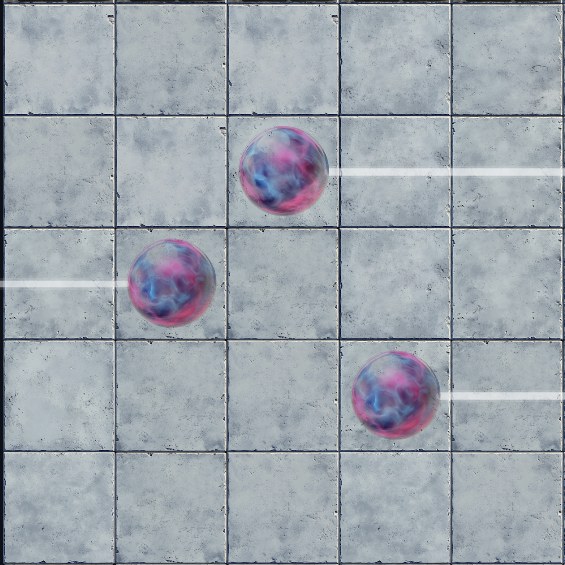
When a warp is struck by a beam, every other warp in the level emits that same beam — in the direction it entered.
The example shows three warps. The left one is hit by a white laser, and the same white beam comes out of each of the other two.
One level deeper
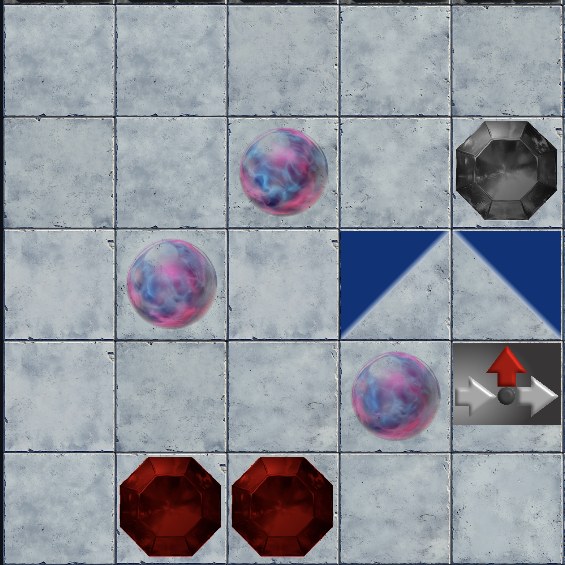
Here a white beam enters the left warp and emerges white from the other two.
To the right of the middle warp, red is then peeled off by a colour splitter and routed back into the same warp via two mirrors. That red beam now exits the other two warps in the same direction it entered.
Warps make self-sustaining beams and re-combining of colours theoretically possible — beyond the scope of this guide. Work through the Tutorial level pack to dig deeper.
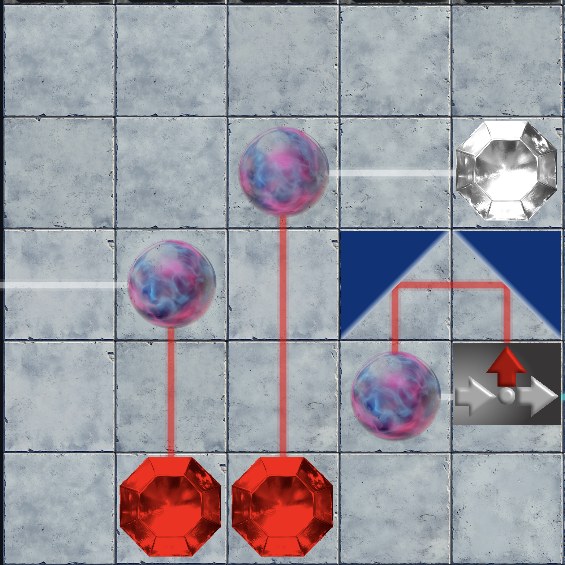
Logic tiles
For when mirrors and splitters are no longer enough — a world of their own.
Beyond the tiles in this guide there are fourteen logic tiles: gates that combine two beams, tiles with a memory that remember what happened, and clocks that blink all by themselves.
They do not bend light — they answer it. That is how you build circuits instead of beam paths.